
Queensland is phasing in a single standard for every home: photoelectric smoke alarms, interconnected so they all sound together, installed in every bedroom, in hallways that connect bedrooms to the rest of the home, and on every storey. Rental and sold properties have had to meet the standard since 2022. Every other home, including the one you own and live in, must meet it by 1 January 2027. This page is a plain-language summary, verified against official sources in July 2026, and is not legal advice. If you want the work done, our smoke alarm installation service covers assessment, upgrade and compliance documentation across the Gold Coast.
WHO IT APPLIES TO
Queensland smoke alarm laws apply to all residential properties, including owner-occupied homes, rentals and homes being sold. What you have to do, and by when, depends on which of those describes you. The sections below set out the standard itself, the dates, and the duties that attach to owners, landlords and sellers.
WHAT A COMPLIANT HOME HAS
Photoelectric alarms, compliant with Australian Standard AS 3786:2014. They detect smouldering smoke earlier than the older ionisation type, which is no longer accepted for new installations.
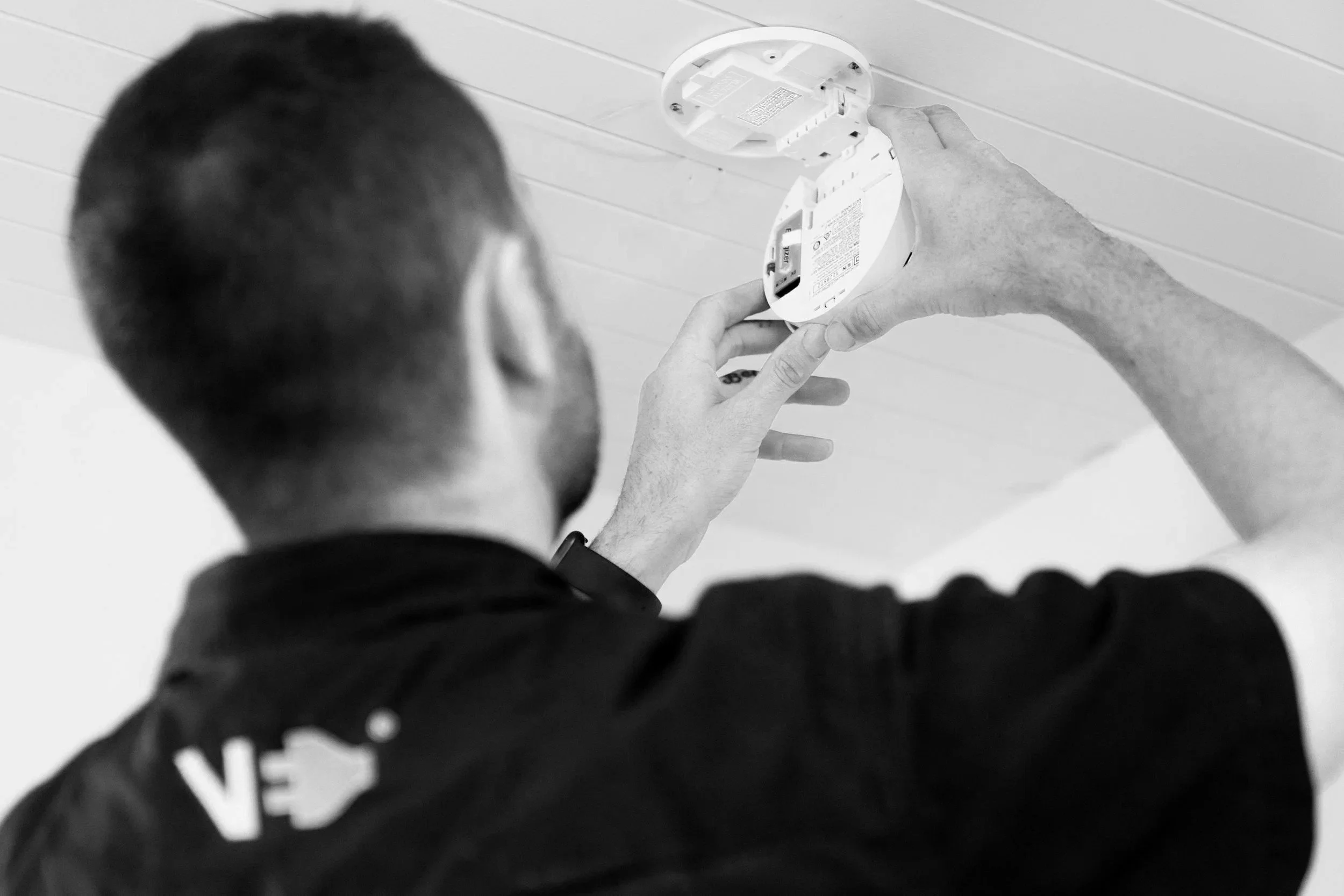
Interconnection, so when one alarm triggers every alarm in the home sounds. This can be wired or wireless. Wireless interconnection with sealed 10-year lithium batteries is the usual retrofit path because it avoids recabling finished ceilings.
The right locations: every bedroom, hallways connecting bedrooms to the rest of the dwelling, and at least one alarm on every storey.
In-date alarms. Smoke alarms must be replaced within 10 years of the manufacture date printed on the alarm. Hardwired interconnected alarms installed by a licensed electrician come with a Certificate of Testing and Compliance under the Electrical Safety Regulation 2013.
The right placement. Alarms go on the ceiling, at least 300mm clear of any corner or light fitting, and at least 400mm clear of an air conditioning outlet or the blades of a ceiling fan.
THE TIMELINE
From 1 January 2017: new builds and substantially renovated homes have had to be built to the interconnected photoelectric standard.
From 1 January 2022: homes being sold, and homes at the start of a new lease or a lease renewal, must meet the standard.
From 1 January 2027: all remaining Queensland homes must meet it, including owner-occupied homes that have not been sold or renovated in the meantime.
If you own and live in your home, the statewide deadline is still 1 January 2027. Expired, faulty or missing alarms need attention now, and a sale, a new or renewed lease, or a substantial renovation brings the interconnected photoelectric standard forward before that date. If you are selling, the obligation is triggered when the sale contract is signed, and you declare compliance to the buyer on the Property Information (Transfer) form, known as Form 24.
Homes bought or leased since 2022 should already meet the standard. If yours predates that, 1 January 2027 is the date that matters.
IF YOU RENT THE PROPERTY OUT
Compliance has been required at every new lease or lease renewal since 1 January 2022, and the obligations continue after that.
The lessor must test and clean each smoke alarm within 30 days before the start of a tenancy, and failed or expired alarms must be replaced.
Tenants have their own duties during the tenancy, including testing, cleaning and reporting faults, but the lessor remains responsible for the alarms themselves.
The Queensland Fire Department enforces this and can issue infringement notices where obligations are not met, including a lessor's duty to test and clean the alarms.
Official sources: Queensland Fire Department smoke alarm reforms and the Queensland Fire Department smoke alarm FAQ. Where the rules come from: the requirements sit in the Fire Services Act 1990, with related provisions in the Building Regulation 2021 and the Electrical Safety Regulation 2013, administered by the Queensland Fire Department. For the authoritative wording see fire.qld.gov.au.
Already know what you need?
Not sure where your home stands? A licensed electrician can assess what already complies and what needs changing, usually in a single visit. Request a quote online or call 1300 920 923.